Feeling overwhelmed? You are not alone. Discover proven, science-backed stress relief techniques to calm your nervous system, boost mental clarity, and reclaim your daily peace of mind effortlessly.
This comprehensive guide explores the top 10 stress relief techniques validated by science. You will learn practical methods like mindfulness, deep breathing, and somatic exercises to lower cortisol, enhance focus, and build lasting resilience against daily anxiety and burnout.
The Science of Stress and How to Combat It

Before diving into specific stress relief techniques, we must understand what happens to the body when anxiety strikes. When you face a perceived threat, your amygdala sends a distress signal to the hypothalamus. This triggers the fight-or-flight response, flooding your system with cortisol and adrenaline. While this mechanism kept our ancestors alive, chronic activation in modern life leads to burnout, high blood pressure, and weakened immunity.
By applying targeted stress relief techniques, you activate the parasympathetic nervous system. This “rest and digest” state lowers your heart rate, reduces cortisol levels, and restores equilibrium.
1. Diaphragmatic Breathing
Diaphragmatic breathing, often called belly breathing, is one of the most immediate stress relief techniques available. By engaging the diaphragm rather than shallow chest muscles, you signal to your vagus nerve that you are safe.
How to Practice:
- Sit or lie down in a comfortable position.
- Place one hand on your chest and the other on your stomach.
- Breathe in deeply through your nose for four seconds. Your stomach should rise.
- Hold your breath for two seconds.
- Exhale slowly through your mouth for six seconds.
- Repeat for five minutes.
The Science:
Studies from the Frontiers in Psychology show that diaphragmatic breathing significantly lowers salivary cortisol levels and improves sustained attention.
Mini-Conclusion: Mastering deep breathing provides a portable, invisible tool you can use anywhere to instantly regulate your nervous system.
2. Mindfulness Meditation
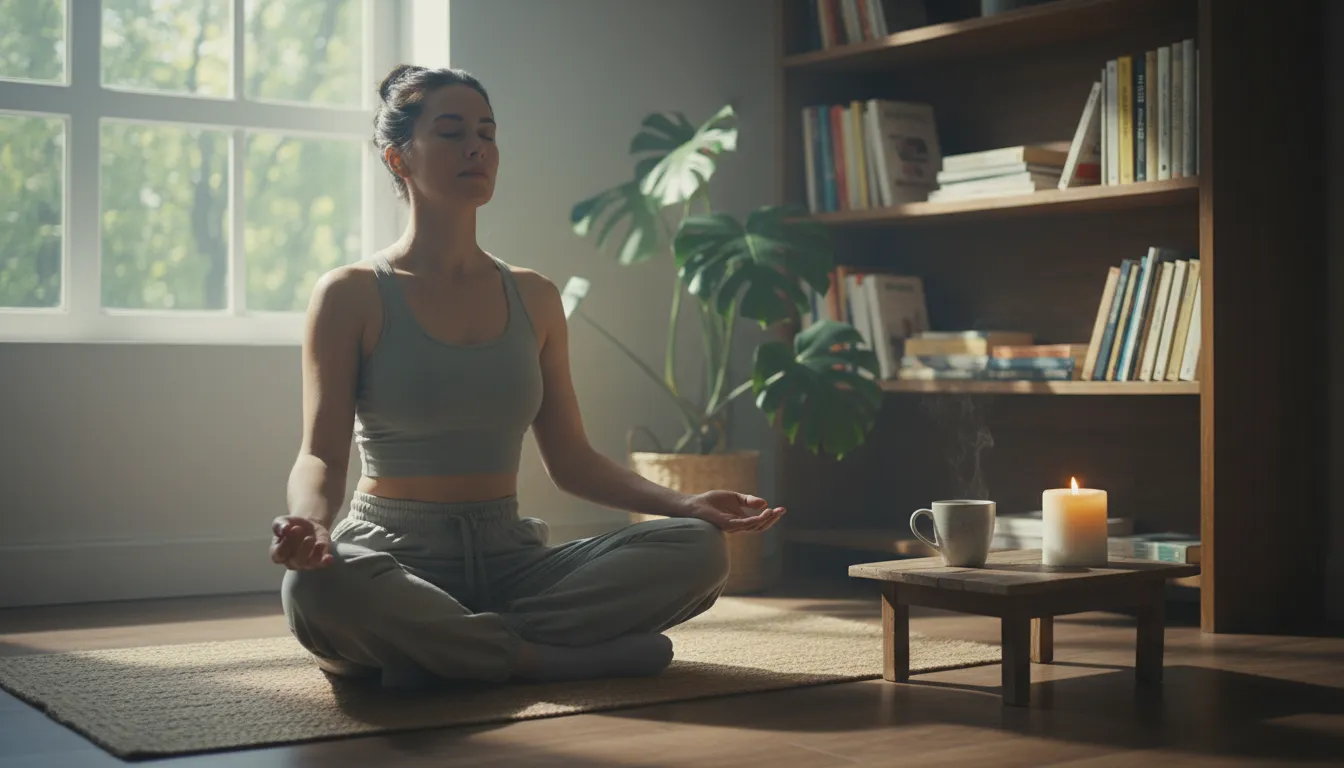
Mindfulness meditation involves focusing your awareness on the present moment while calmly acknowledging and accepting your feelings, thoughts, and bodily sensations. It ranks among the most thoroughly researched stress relief techniques.
Actionable Steps:
- Find a quiet space and set a timer for 10 minutes.
- Focus purely on the sensation of your breath.
- When your mind wanders (and it will), gently guide your focus back without judgment.
Expert Insight:
Consistent mindfulness practice physically alters the brain. Research indicates it shrinks the amygdala (the brain’s fear center) and thickens the prefrontal cortex, which governs awareness and decision-making.
3. Progressive Muscle Relaxation (PMR)
Developed by Dr. Edmund Jacobson, PMR involves tensing and then consciously releasing different muscle groups. This method helps you identify physical tension you might not realize you are holding.
How to Execute PMR:
- Start at your toes. Tense the muscles tightly for 5 seconds.
- Release the tension instantly and notice the feeling of relaxation for 10 seconds.
- Move upward to your calves, thighs, abdomen, arms, and finally your face.
This technique is highly effective for individuals suffering from stress-induced insomnia, making it a cornerstone among nighttime stress relief techniques.
4. Cardiovascular Exercise
Physical activity is not just for physical fitness; it is a profound mental health intervention. Regular aerobic exercise reduces levels of the body’s stress hormones and stimulates the production of endorphins.
Best Practices:
- Aim for at least 30 minutes of moderate aerobic exercise (brisk walking, cycling, swimming) five days a week.
- Mix in high-intensity interval training for rapid endorphin release.
- Exercise outdoors when possible to compound the benefits.
Mini-Conclusion: Moving your body metabolizes stress hormones, acting as a natural reset button for your brain chemistry.
5. Nature Exposure (Ecotherapy)
Spending time in green spaces, a practice the Japanese call Shinrin-yoku or “forest bathing,” lowers blood pressure and reduces stress hormone production.
How to Implement:
- Spend at least 120 minutes per week in natural environments.
- Leave your phone behind to avoid digital distractions.
- Focus on the sensory details: the sound of leaves, the smell of pine, and the texture of bark.
Incorporating ecotherapy into your routine is one of the most accessible stress relief techniques for urban dwellers looking to escape constant stimulation.
6. Cognitive Reframing
Cognitive reframing is a core component of Cognitive Behavioral Therapy (CBT). It involves identifying negative or irrational thoughts and replacing them with balanced, realistic alternatives.
Step-by-Step Guide:
- Catch it: Identify the thought causing distress (e.g., “I am going to fail this project”).
- Check it: Look for evidence supporting and contradicting this thought.
- Change it: Replace it with a balanced thought (e.g., “This project is challenging, but I have the skills to complete it”).
By changing how you perceive stressors, you directly alter your emotional and physical reaction to them.
7. Optimizing Sleep Hygiene
A lack of sleep drastically increases cortisol and leaves you highly reactive to daily stressors. Improving your sleep hygiene is foundational to managing anxiety.
Tips for Better Sleep:
- Maintain a strict sleep schedule, even on weekends.
- Keep your bedroom cool, dark, and quiet.
- Avoid blue light from screens at least one hour before bed.
- Incorporate other stress relief techniques like PMR right before sleep.
8. Social Connection and Support
Humans are inherently social creatures. Engaging with friends, family, or support groups releases oxytocin, a hormone that actively counters cortisol.
Actionable Strategies:
- Schedule weekly check-ins with close friends.
- Join local hobby groups to meet like-minded individuals.
- Volunteer in your community to build a sense of purpose and connection.
Mini-Conclusion: Never underestimate the power of a simple conversation. Strong social networks are powerful buffers against the damaging effects of chronic stress.
9. Expressive Journaling
Writing about your thoughts and feelings helps process complex emotions. Translating messy feelings into structured language reduces the cognitive load on your brain.
Journaling Framework:
- Write for 15 minutes continuously without worrying about grammar or spelling.
- Focus on what you are feeling and why you might be feeling that way.
- End your entry by listing three things you are grateful for today.
This practice transforms abstract anxiety into manageable, concrete thoughts.
10. Aromatherapy
Inhaling certain essential oils stimulates the olfactory system, which directly connects to the limbic system—the emotional center of the brain.
Effective Scents:
- Lavender: Proven to slow heart rate and lower blood pressure.
- Bergamot: Reduces cortisol levels and alleviates fatigue.
- Ylang Ylang: Promotes relaxation and decreases anxiety symptoms.
Using a diffuser in your workspace serves as an excellent, passive addition to your arsenal of stress relief techniques.
Comparison Table: Choosing the Right Technique
|
Technique |
Time Required |
Best Used For |
Primary Benefit |
|---|---|---|---|
|
Deep Breathing |
1–5 Minutes |
Acute stress, panic |
Instant nervous system regulation |
|
Meditation |
10–20 Minutes |
Daily maintenance |
Long-term brain restructuring |
|
Exercise |
30+ Minutes |
Burnout, frustration |
Endorphin release, cortisol reduction |
|
Journaling |
10–15 Minutes |
Overthinking, confusion |
Emotional processing and clarity |
|
Aromatherapy |
Passive |
Workday stress |
Passive limbic system calming |
Common Mistakes to Avoid
When attempting to implement stress relief techniques, many people stumble due to a few common pitfalls:
- Inconsistency: Practicing meditation once a month will not yield results. These techniques require consistent, daily application to reshape your neural pathways.
- Forcing Relaxation: Getting stressed about not feeling relaxed defeats the purpose. Allow your body to unwind at its own pace without judgment.
- Ignoring the Root Cause: Breathing exercises are excellent, but if you remain in a toxic work environment, you are only treating the symptoms. Address the root causes of your stress whenever possible.
- Relying on Unhealthy Coping Mechanisms: Do not confuse genuine stress relief techniques with numbing behaviors like doomscrolling, excessive drinking, or binge-eating.
Pro Tips and Expert Insights
To maximize the effectiveness of your routine, consider these advanced strategies:
- Habit Stacking: Attach a new stress relief habit to an existing one. For example, practice deep breathing while your morning coffee brews.
- Track Your Triggers: Keep a daily log to identify patterns in your anxiety. Knowing your triggers allows you to apply stress relief techniques proactively rather than reactively.
- Embrace Imperfection: You do not need a perfectly quiet room to meditate. Learning to find calm amidst chaos is the ultimate goal of stress management.
- Focus on Holistic Health: Combine these psychological techniques with robust nutritional planning and proper hydration for maximum physiological resilience.
Conclusion
Mastering these science-backed stress relief techniques empowers you to navigate life’s toughest challenges with ease and resilience. By building a consistent daily routine, you actively protect your long-term mental and physical health. Ready to transform your well-being? Start practicing your favorite method today and subscribe for more wellness tips.
Frequently Asked Questions (FAQs)
1. What are the fastest stress relief techniques?
The fastest methods involve physiological sighs and diaphragmatic breathing. By changing your breathing pattern, you can signal safety to your nervous system and lower your heart rate in under two minutes.
2. Can stress relief techniques actually lower blood pressure?
Yes. Consistent practices like mindfulness, deep breathing, and cardiovascular exercise lower cortisol and adrenaline. Over time, this reduces the constriction of blood vessels, naturally lowering blood pressure.
3. How often should I practice these methods?
For the best results, aim for daily practice. Even just 5 to 10 minutes of dedicated relaxation each day is more effective than an hour of practice once a week. Consistency builds neurological resilience.
4. Are these techniques backed by scientific research?
Absolutely. Techniques like Cognitive Behavioral Therapy (CBT), meditation, and exercise have decades of peer-reviewed scientific literature proving their efficacy in lowering stress hormones and altering brain structures.
5. Why does my stress get worse when I try to meditate?
This is a common phenomenon known as relaxation-induced anxiety. When you finally slow down, suppressed thoughts often rush to the surface. Start with shorter sessions or try active relaxation like walking instead.
6. Do I need expensive equipment to manage stress?
No. The most effective stress relief techniques—like breathing, running, and cognitive reframing—are completely free and require no specialized equipment.
7. How does sleep affect my stress levels?
Sleep and stress share a bidirectional relationship. High stress ruins sleep quality, and poor sleep elevates cortisol levels the following day. Prioritizing sleep is essential for emotional regulation.
8. Can diet impact my stress levels?
Yes. Diets high in refined sugars and processed foods cause blood sugar spikes and crashes, mimicking the physical symptoms of anxiety. A balanced diet supports a stable nervous system.
9. What is the difference between stress and anxiety?
Stress is typically a response to an external threat or demand, while anxiety is an internal reaction—often lingering even after the stressor is gone. The techniques listed here effectively manage both.
10. When should I seek professional help for stress?
If your stress interferes with your daily functioning, ruins your sleep consistently, or leads to severe physical symptoms, you should consult a licensed therapist or medical professional immediately.